
 English
 русский
 Español
 عربى
عربى 中文简体
中文简体
WE ARE HAPPY TO SOLVE
PROBLEMS FOR CUSTOMERS
learn more >
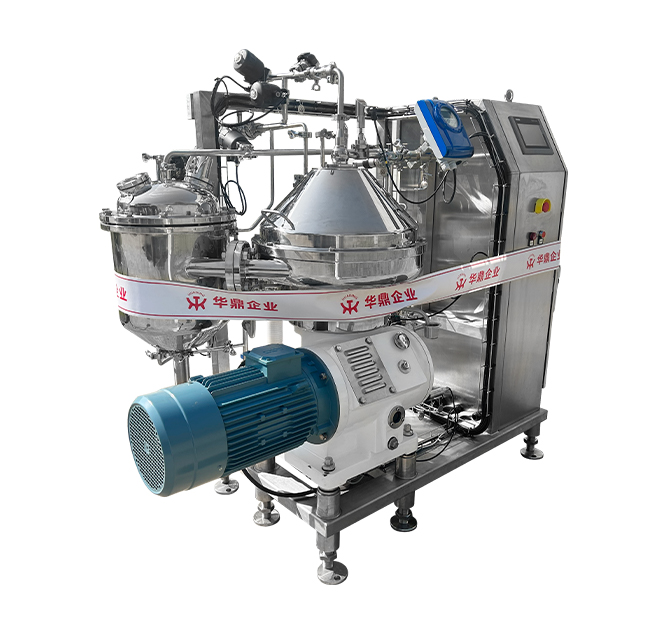
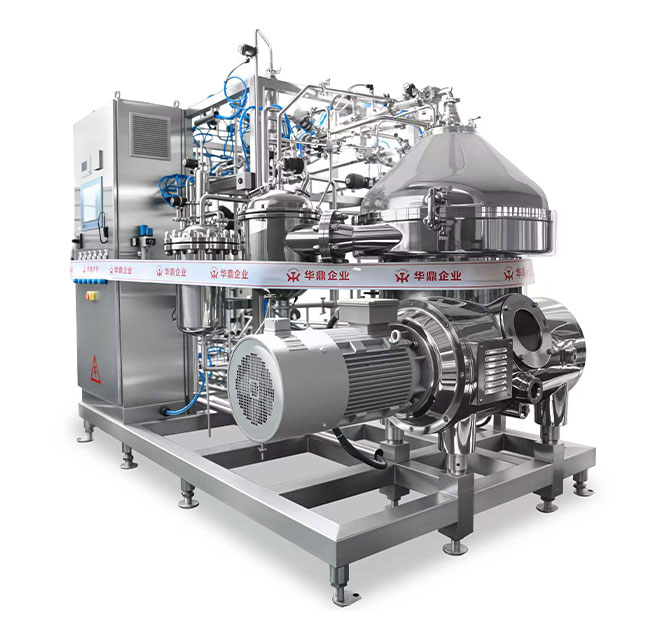
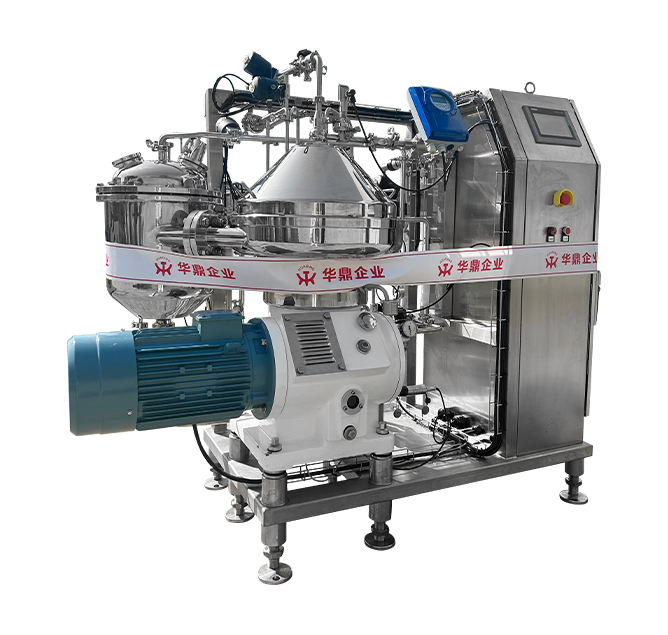
In biopharmaceutical downstream processing, the cell culture Harvest stage is one of the most critical points at which protein stability is vulnerable to disruption. The mechanical Shear Stress generated by a Bio-pharmaceutical Centrifuge during high-speed rotation, combined with localized temperature rises, foam interfaces, and pH fluctuations, can all induce irreversible Protein Aggregation of the target protein.
Aggregates not only directly reduce product yield — more critically, Protein Aggregates carry potential Immunogenicity that may trigger Anti-drug Antibody (ADA) responses in patients, posing a significant safety risk. Both the FDA and EMA explicitly require strict control of aggregate levels in their biologics regulations. Against this backdrop, the systematic optimization of centrifuge conditions is an essential means of protecting protein structural integrity and meeting GMP quality standards.
RCF (Relative Centrifugal Force) is the core parameter governing the sedimentation efficiency of cells and debris. However, excessively high RCF is also a major driver of Protein Aggregation. Under high-RCF conditions, the hydrodynamic shear experienced by protein molecules exceeds their structural stability threshold, exposing hydrophobic regions and enhancing intermolecular interactions, ultimately forming irreversible aggregates.
For the harvest of CHO Cell (Chinese Hamster Ovary Cell) culture fluid, industrial practice typically recommends maintaining RCF within the range of 500–2,000 x g for initial clarification. For high-density fermentation broths or samples containing large amounts of Cell Debris, a two-step centrifugation strategy can be employed: the first step uses a lower RCF (approximately 300–500 x g) to remove intact cells, while the second step applies a higher RCF (1,000–3,000 x g) to remove cell debris. This approach achieves the required clarification while minimizing the cumulative shear stress imposed on the protein.
Temperature is the most direct physical factor influencing protein conformational stability. During operation of a Bio-pharmaceutical Centrifuge, heat generated by the motor and mechanical friction causes the temperature inside the rotor chamber to rise. Without active management, sample temperature during centrifugation may briefly exceed the protein's thermal stability boundary, accelerating the onset of Aggregation.
Process optimization should target maintaining the temperature throughout centrifugation at 2–8°C, consistent with the low-temperature conditions of subsequent chromatographic purification steps. Industrial-grade Bio-pharmaceutical Centrifuges equipped with an Active Cooling System can achieve precise closed-loop control of chamber temperature. During process development, the thermal melting temperature (Tm) of the target protein should be determined by Differential Scanning Calorimetry (DSC), and a value at least 20°C below Tm should be used as the safe upper limit reference for centrifugation temperature.
During the Ramp-up and Ramp-down phases of centrifugation, relative motion exists between the liquid and the rotor, generating Turbulent Shear that represents a hidden risk factor for Protein Aggregation — one that is frequently overlooked during process development.
Excessively rapid acceleration prevents the sample liquid from synchronizing with the rotor's rotation, producing intense fluid disturbance. Overly abrupt braking disrupts already-sedimented cell layers, causing Cell Debris to resuspend and come into contact with the target protein in the supernatant, triggering interface-induced aggregation.
The optimization strategy is to program the acceleration and deceleration rates of the Bio-pharmaceutical Centrifuge in a stepwise manner. A Slow Ramp-up (approximately 50–100 RPM/s) and Gentle Braking mode are recommended, particularly when processing high-concentration antibody drug substances or shear-sensitive fusion proteins. The ramp-up and braking duration should be extended to at least 3–5 minutes under such conditions.
The aggregation behavior of proteins is closely linked to solution pH. When the pH approaches the target protein's Isoelectric Point (pI), the net charge of the protein approaches zero, intermolecular electrostatic repulsion weakens, Hydrophobic Interaction dominates, and the tendency toward aggregation increases significantly.
Adjusting the pH of the culture fluid prior to Harvest so that it deviates from the pI by at least 1–2 pH units is an effective strategy for reducing Aggregation risk. Additionally, adding low concentrations of stabilizing agents such as Polysorbate 80 or Arginine to the harvest buffer can inhibit aggregate nucleation and growth by competitively occupying hydrophobic surface sites on the protein molecule.
Pre-centrifugation pH adjustment should be carried out slowly under gentle agitation conditions to avoid transient aggregation caused by localized over-acidification or over-alkalization.
When using a Continuous Flow Centrifuge for industrial-scale Harvest, the Feed Rate directly determines the Residence Time of the sample within the centrifuge chamber and the shear level to which it is subjected. An excessively high flow rate results in insufficient sedimentation of cells and debris — leading to substandard clarification — while simultaneously generating high-velocity jet shear at the Distributor and outlet ports, inducing Protein Aggregation.
Process optimization should apply a Design of Experiment (DoE) approach to systematically evaluate the relationship between Feed Rate and clarification performance as well as aggregate levels, and to establish an operational Design Space. Pre-filtration of the culture fluid before feeding — to remove large cell clumps — can effectively reduce fluid disturbance within the centrifuge chamber and protect protein structural integrity.
The introduction of the Process Analytical Technology (PAT) framework has shifted the process optimization of a Bio-pharmaceutical Centrifuge from experience-driven to data-driven. An Inline Turbidimeter can monitor the clarification quality of the centrifuge effluent in real time, automatically triggering parameter adjustments when turbidity rises abnormally. An inline Dynamic Light Scattering (DLS) probe can directly detect the real-time particle size distribution of nanoscale aggregates in the harvest fluid, providing immediate quality feedback for process Scale-up.
By integrating data acquisition and analysis systems (SCADA/DCS) to correlate centrifuge parameters — including speed, temperature, flow rate, and vibration — with protein Critical Quality Attributes (CQA), a predictive control strategy can be established to fundamentally prevent batch-to-batch variation in Protein Aggregation.
Copyright ©Yixing Huading Machinery Co.,Ltd. All Rights Reserved. Custom Centrifugal Separator Factory