
 English
 русский
 Español
 عربى
عربى 中文简体
中文简体

WE ARE HAPPY TO SOLVE
PROBLEMS FOR CUSTOMERS
learn more >
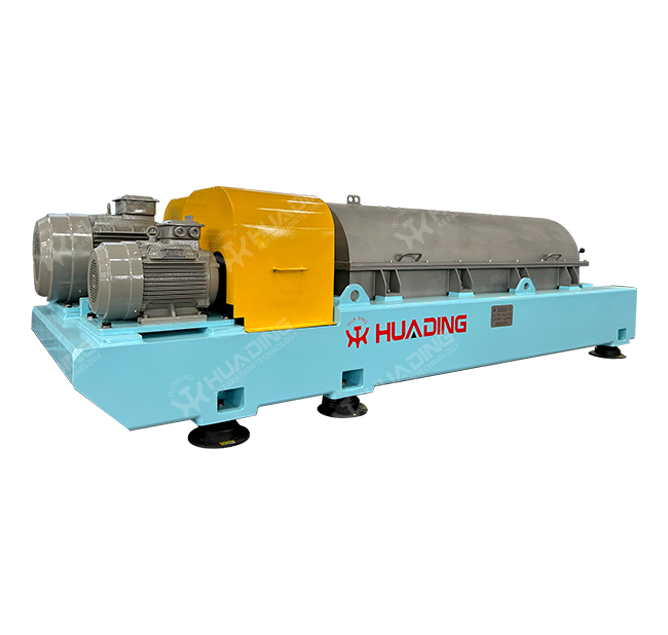
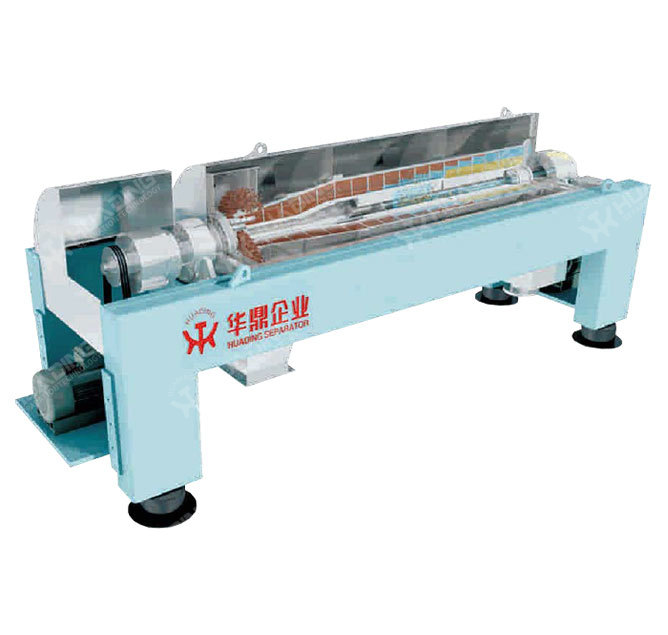
Dairy processing plants rely heavily on decanter centrifuges for solid-liquid separation, fat clarification, whey processing, protein recovery, and by-product refinement. The rheological properties of the feed material play a decisive role in separation performance. High-viscosity dairy media and high-fat dairy mixtures exert a strong influence on separation efficiency, energy consumption, machine stability, and final product clarity. Cream-rich streams, concentrated whey, yogurt slurry, cheese-processing effluent, and fat-containing wastewater represent common examples of materials that challenge decanter centrifuge performance.
 |
 |
Viscosity directly determines the settling velocity of suspended particles. Decanter centrifuges rely on centrifugal acceleration to drive solid particles toward the bowl wall. When viscosity rises, the relative motion between particles and the surrounding liquid becomes significantly restricted. High-viscosity dairy media reduce settling speed and require longer residence time to achieve the same degree of separation.
Viscous feed streams often produce thicker sediment layers and unstable separation interfaces. This effect becomes evident when processing concentrated whey proteins, yogurt by-products, or coagulated dairy suspensions. High viscosity increases hydraulic resistance, weakens the clarification zone, and contributes to elevated turbidity in the discharged liquid.
Viscosity also affects the transport behavior of solids within the centrifuge. Sticky solids generate higher torque on the scroll conveyor, increasing mechanical load and reducing discharge efficiency.
Many dairy components exhibit strong sensitivity to shear forces. Fat globules, casein aggregates, and protein complexes may undergo structural disruption when exposed to high shear environments inside the decanter. In a viscous medium, shear stress becomes more intense and can cause fat globule rupture or protein fragmentation.
Structural breakdown changes particle size distribution, creating finer suspended particles that resist settling. Liquid turbidity increases when originally separable aggregates disperse into smaller fragments. This effect frequently appears when processing yogurt slurry, fat-protein mixtures, or whey containing partially destabilized cream fractions.
 |
 |
High-fat dairy systems behave differently from water-dominant dairy mixtures. Fat globules exhibit buoyancy, lower density, and modified interfacial behavior in a centrifugal field. In high-fat feeds, oil-rich phases tend to move toward the bowl center, while solids migrate outward. This multi-phase distribution requires stable hydrodynamic conditions. Large variations in fat content influence interface positions, causing inconsistent separation boundaries and fluctuating clarity at the liquid outlets.
High-fat dairy materials also tend to create sticky or waxy deposits on the bowl wall. Fat layers can adhere to the separation zone, constrict flow channels, and distort internal hydraulic conditions. Excessive fat adhesion reduces clarifying performance, alters flow velocities, and may induce mechanical imbalance. Fat accumulation in the liquid-discharge section can reduce throughput and increase the load on both the main motor and differential drive.
High-fat dairy by-products often demonstrate viscoelastic characteristics. Under strong centrifugal force, viscoelastic solids may deform while still retaining adhesive properties. This behavior reduces dewatering efficiency, yielding wetter solids with lower dryness. Cheese fines, curd-cutting effluent, and mixed fat-protein precipitates may form cohesive gel-like layers at the bowl bottom. The scroll conveyor must exert higher torque to transport these solids, increasing power consumption and raising the risk of torque alarms.
The presence of viscoelastic solids also limits the achievable dryness level. Even with optimized differential speed, viscoelastic sediment resists compaction, restricting the separation system’s ability to produce a firm, well-dewatered cake.
Processing viscous or fat-rich dairy materials requires greater mechanical power. High viscosity increases drag inside the bowl, demanding higher main-motor power to maintain rotational speed. The scroll must work harder to overcome solid-phase resistance, elevating energy consumption per unit of processed material.
Fat layers that build up within the clarification zone narrow hydraulic passages, increasing localized flow resistance and raising motor load. In systems where fat content fluctuates, these changes can create unpredictable variations in energy demand. Viscous dairy mixtures often force the differential drive to operate at more dynamic settings to preserve transport stability, further contributing to energy consumption.
Temperature strongly influences viscosity and fat behavior. High-fat dairy feeds experience dramatic increases in viscosity at lower temperatures. Fat may partially solidify or crystallize, further slowing settling and intensifying flow resistance. Cooler temperatures promote the formation of dispersed fine fat particles that behave like suspended solids, reducing separation efficiency.
Decanter centrifuges processing high-fat dairy feeds require stable temperature control to maintain optimal rheology. Even small temperature variations can shift interface positions, alter sediment characteristics, or decrease clarity at the liquid outlets.
Viscous and high-fat dairy feeds place increased demands on decanter design, including conveyor torque capacity, bowl geometry, wear resistance, differential-speed range, and discharge-port configuration. Clarification performance, solids dryness, and long-term stability depend heavily on the machine’s ability to maintain consistent flow patterns under challenging rheological conditions.
Copyright ©Yixing Huading Machinery Co.,Ltd. All Rights Reserved. Custom Centrifugal Separator Factory