
 English
 русский
 Español
 عربى
عربى 中文简体
中文简体
WE ARE HAPPY TO SOLVE
PROBLEMS FOR CUSTOMERS
learn more >
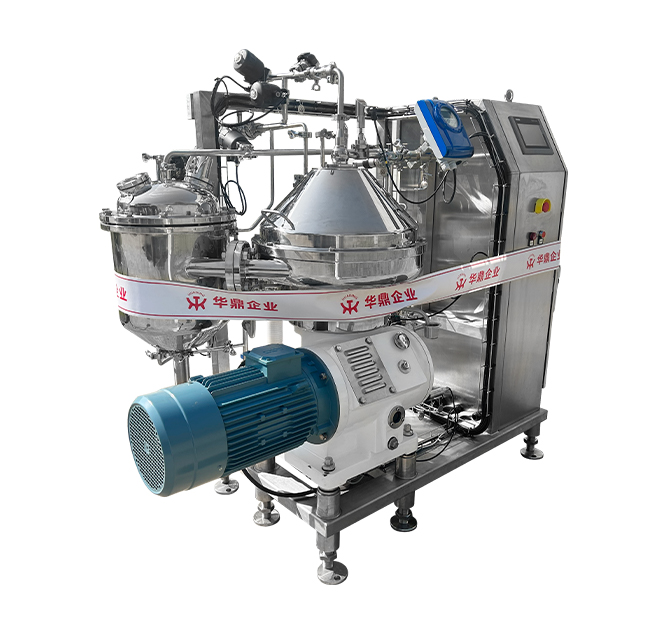
Chemical slurries are characterized by complex compositions and highly variable physical properties. Typical features include fluctuating solids concentration, wide particle size distribution, elevated viscosity, corrosive or toxic components, and strict environmental requirements. As chemical production increasingly shifts toward continuous and automated processes, the selection of solid–liquid separation equipment becomes a critical decision point.
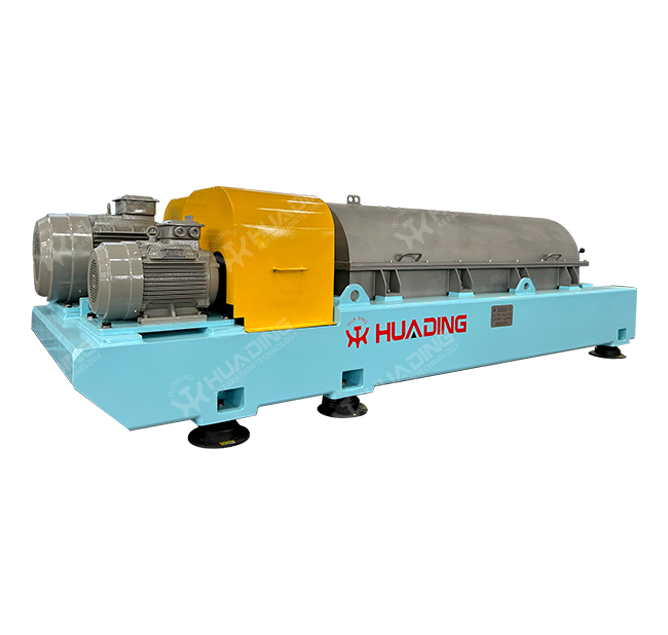
Decanter centrifuges and filtration equipment represent two fundamentally different separation technologies. Each technology operates within distinct application boundary conditions that determine suitability in chemical slurry processing.
Filtration equipment relies on pressure differential or vacuum as the driving force for separation. Solid particles are retained by filter media, gradually forming a filter cake that acts as a secondary filtration layer. This mechanism performs efficiently when solids are relatively coarse, incompressible, and capable of forming a permeable cake structure.
In chemical slurries containing fine particles, colloidal solids, or compressible materials, filtration resistance increases rapidly as cake thickness grows. Flow rates decline, cycle times extend, and stable throughput becomes difficult to maintain. These characteristics define a clear limitation for filtration equipment.
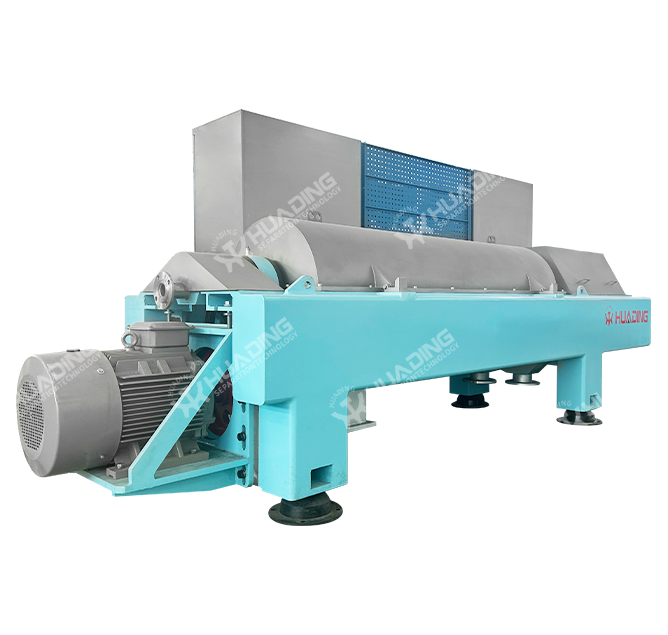
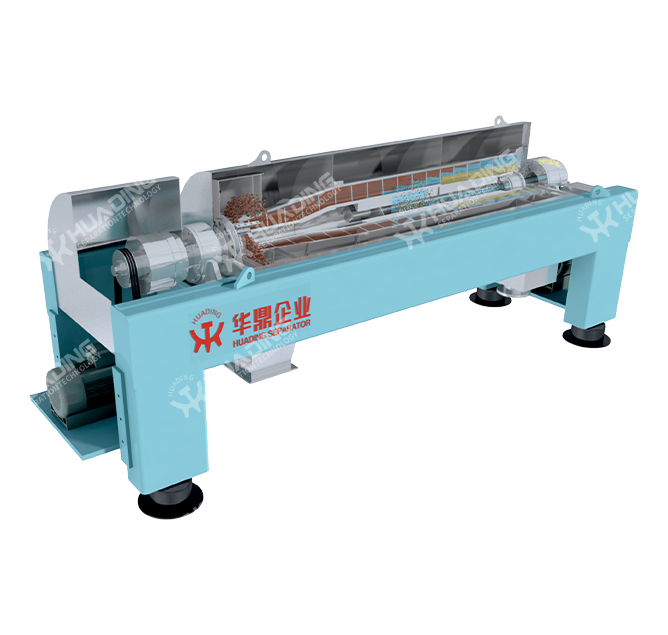
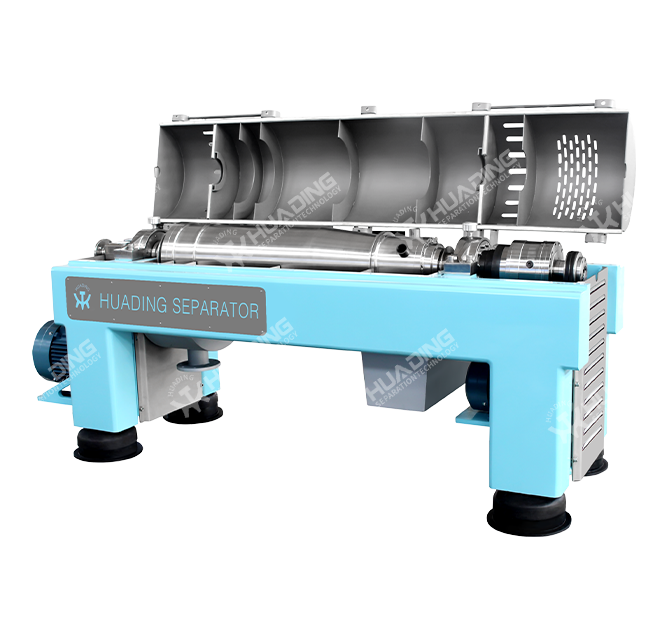
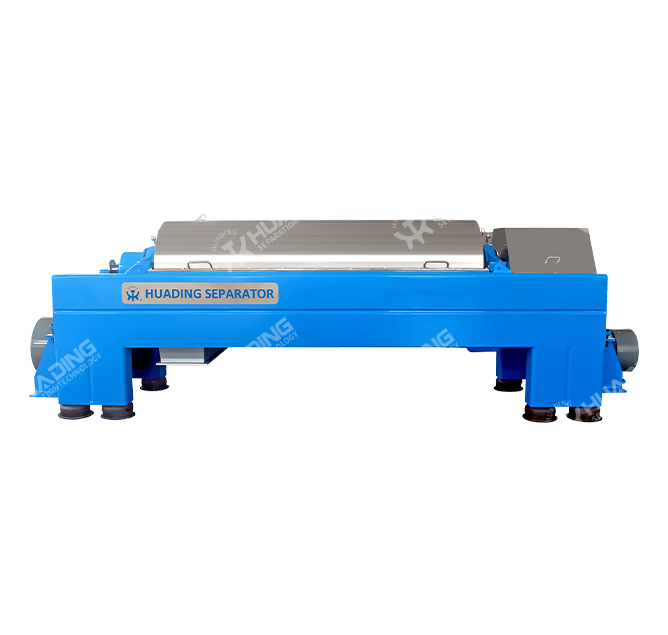
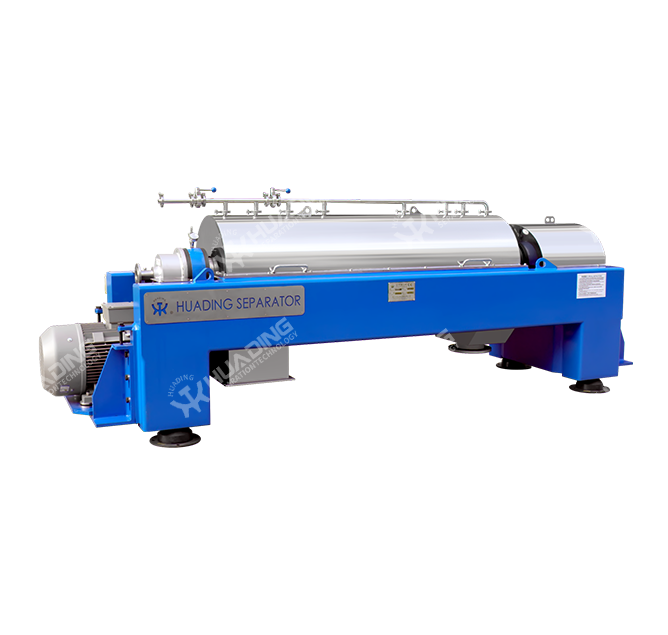
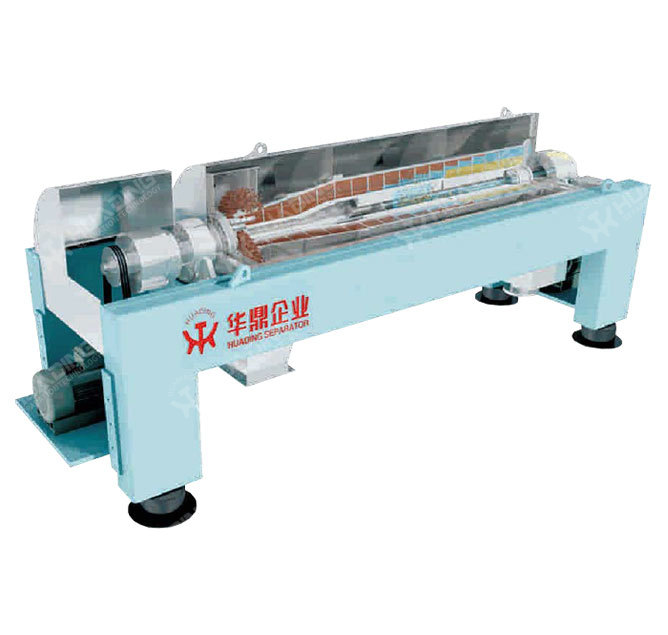
Decanter centrifuges operate under high centrifugal force, often several thousand times greater than gravity. Separation efficiency depends primarily on density difference and centrifugal acceleration rather than cake permeability. This allows decanter centrifuges to process fine, slow-settling particles and chemically complex slurries more reliably, establishing a broader operating boundary in demanding chemical applications.
Most filtration systems operate in batch or semi-continuous modes. Filter cake formation, discharge, and filter media regeneration interrupt process continuity. In chemical plants with steady-state reactions or crystallization processes, such interruptions can disrupt upstream and downstream units.
Decanter centrifuges are designed for fully continuous operation, enabling uninterrupted feeding, separation, and solids discharge. This operational mode aligns well with continuous chemical reactors, extractors, and crystallizers. In production environments requiring stable mass balance and consistent product quality, continuous operation defines a key boundary where decanter centrifuges demonstrate clear advantages over filtration equipment.
Filtration equipment performs efficiently within a relatively narrow solids concentration range. As feed solids increase, filter cake thickness grows rapidly, leading to extended filtration cycles and reduced throughput. High solids slurries may also cause premature clogging or uneven cake formation.
Decanter centrifuges tolerate wide fluctuations in feed solids concentration, commonly handling slurries ranging from low single-digit solids to over 40% by weight. Through adjustment of bowl speed, differential speed, and pond depth, decanter centrifuges maintain separation stability even under high-load conditions. This flexibility defines an important boundary for chemical slurry processing involving variable feed characteristics.
Viscosity and flow behavior strongly influence separation performance. Filtration relies on fluid flow through porous media, making it sensitive to viscosity increases. Non-Newtonian or shear-thinning chemical slurries often experience severe throughput limitations in filtration systems.
Decanter centrifuges apply mechanical transport and centrifugal force, reducing dependence on fluid permeability. High-viscosity and shear-sensitive chemical slurries can be processed more effectively, provided sufficient torque capacity and appropriate screw design are applied. This capability extends the usable boundary of decanter centrifuges in specialty and fine chemical applications.
Many chemical slurries contain hazardous, volatile, or corrosive substances. Open or semi-open filtration systems expose filtrate and filter cake during discharge, increasing risks related to vapor emissions, operator safety, and environmental compliance.
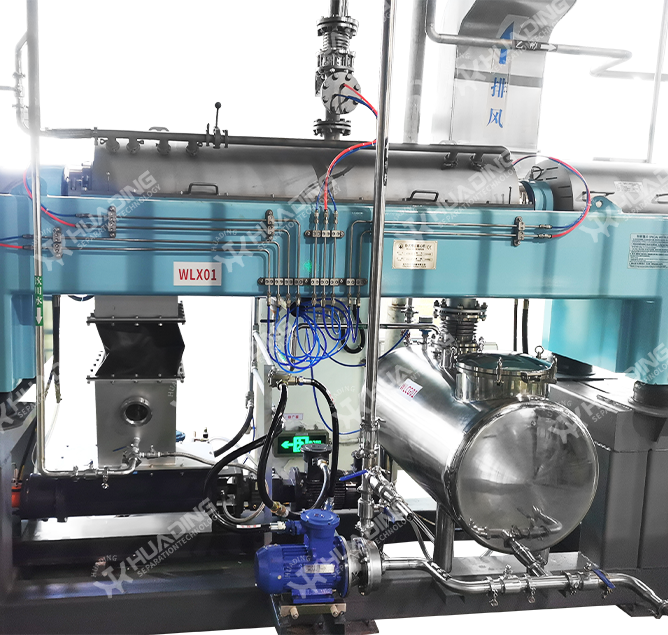
Decanter centrifuges feature fully enclosed designs, enabling inert gas blanketing, vapor containment, and controlled discharge. This configuration supports compliance with explosion-proof standards, VOC emission regulations, and strict environmental control requirements. In safety-critical chemical environments, these factors define a decisive application boundary favoring decanter centrifuges.
Filtration equipment can achieve low cake moisture content under optimal conditions, making it suitable for applications requiring maximum dryness. However, filtration performance is sensitive to feed fluctuations, filter media condition, and operator intervention.
Decanter centrifuges typically produce solids with slightly higher residual moisture compared to some filtration methods, but with significantly improved consistency. Continuous mechanical separation ensures stable product quality across extended operating periods. In chemical processes where uniformity and repeatability outweigh maximum dryness, this stability defines the practical boundary for decanter centrifuge application.
Filtration systems rely heavily on consumable components such as filter cloths, plates, and seals. In abrasive or crystallizing chemical slurries, replacement frequency and maintenance labor can increase substantially.
Decanter centrifuges require higher initial investment but benefit from automation, reduced labor dependence, and long-term durability when equipped with wear-resistant and corrosion-resistant materials. Over continuous operation cycles, lifecycle costs often favor decanter centrifuges in chemical plants with demanding duty cycles.
Decanter centrifuges demonstrate clear advantages over filtration equipment under the following chemical slurry processing conditions:
Continuous and uninterrupted production requirements
Wide fluctuations in solids concentration and feed properties
Fine or slow-settling solid particles
Moderate to high slurry viscosity
Strict safety, environmental, and containment requirements
Copyright ©Yixing Huading Machinery Co.,Ltd. All Rights Reserved. Custom Centrifugal Separator Factory